From a tripped breaker to a failing capacitor, here's why your AC is blowing warm air — and which causes you can fix yourself.
Your AC Is Running, But the Air Isn't Cold. Here's What's Happening.
It's a familiar Phenix City scene. The thermostat reads 78, the unit is humming away outside, and the vents are pushing air. But that air is room temperature at best, and the house keeps creeping warmer while the afternoon sun bakes the roof. On a 95-degree July day in the Chattahoochee Valley, that's not just uncomfortable. It gets dangerous fast for kids, older folks, and pets.
The good news: warm air from a running AC almost always points to one of a handful of common causes. Some you can check and fix in five minutes without touching a tool. Others need a licensed tech and the right gauges. This guide walks you through both, in the order you should actually check them, so you don't waste a hot afternoon guessing.
We've been diagnosing this exact complaint across Russell and Lee Counties since 1997. The pattern repeats every summer. Let's get your home cool again.
Start Here: The Quick Checks You Can Do Yourself
Before you assume the worst, rule out the simple stuff. These are the causes we see most often, and three of them cost nothing to fix.
Work through this list in order. If one of these solves it, you just saved yourself a service call.
- Thermostat set wrong: Make sure it's on COOL, not just FAN. If the fan is set to ON instead of AUTO, the blower runs constantly and pushes warm air between cooling cycles. Switch it to AUTO and set the temperature a few degrees below the room reading.
- Tripped breaker: A central AC uses two connected breakers. Sometimes the indoor side stays on while the outdoor unit's breaker trips. The result is a fan blowing warm air with no actual cooling. Check your panel and look for a breaker sitting halfway between ON and OFF. Flip it fully off, then back on.
- Dirty or clogged air filter: A filter packed with dust and pet hair chokes airflow and can freeze the system. Pull yours out and hold it to the light. If you can't see through it, replace it. In our humid climate, check it monthly during summer.
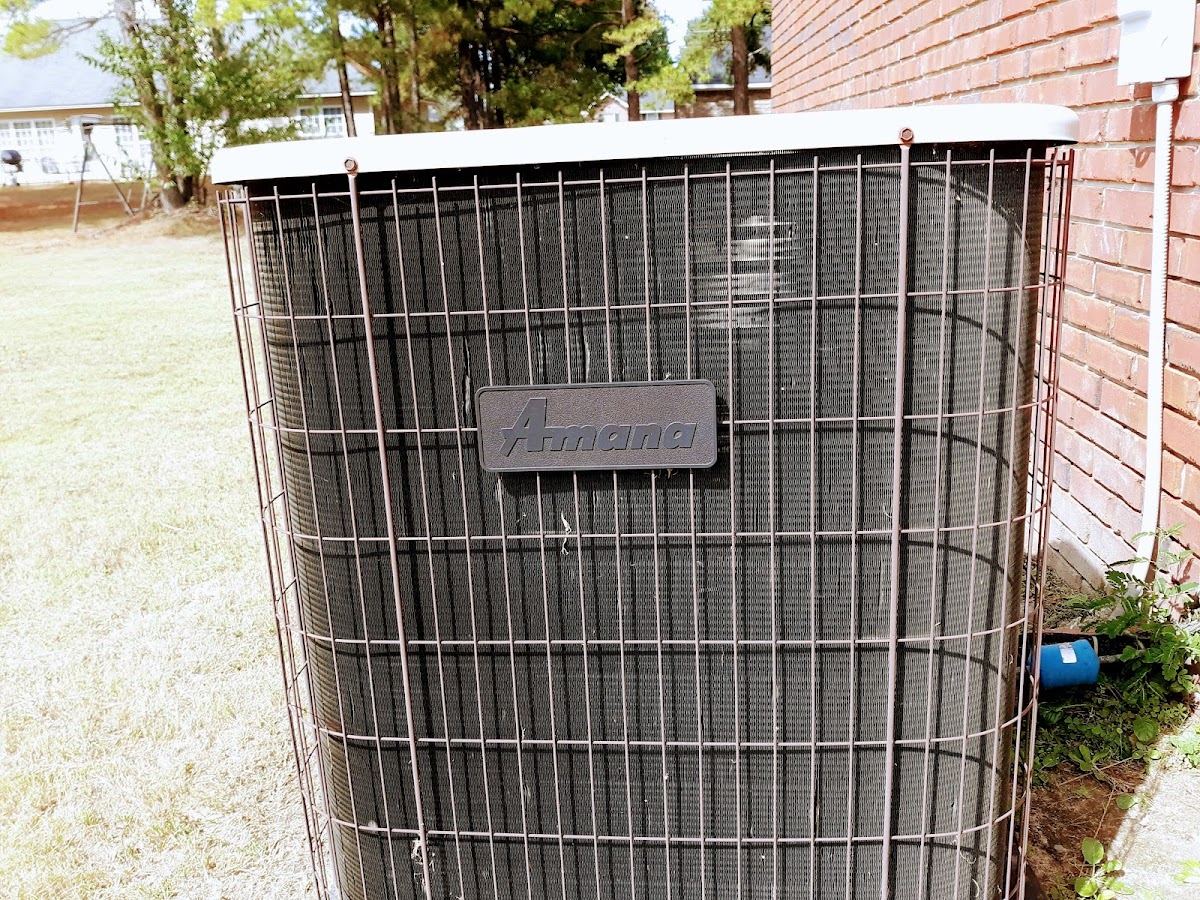
- Outdoor unit covered or blocked: Grass clippings, cottonwood fluff, and overgrown shrubs smother the condenser coil. Clear at least two feet of space around the outdoor unit and gently rinse the fins with a garden hose (power off first).

The Phenix City Humidity Factor: A Frozen Coil
Here in the Chattahoochee Valley, our biggest enemy isn't just heat, it's moisture. The river microclimate keeps humidity high, and that has a sneaky way of turning into warm air at your vents.
When airflow drops (usually from a dirty filter or low refrigerant) the indoor evaporator coil gets too cold and condensation freezes on it. A block of ice forms over the coil, air can't pass through, and what does reach your vents feels warm and weak. Many homeowners only discover the problem when they see the indoor unit sweating or water pooling near the air handler.
If you suspect a frozen coil, turn the system to OFF and set the fan to ON for a couple of hours to thaw it. Then replace the filter before restarting in COOL mode. If it freezes again within a day, the cause is deeper than airflow, and that usually means refrigerant. Don't keep running a frozen system. You can burn out the compressor, and that's the most expensive part in the whole machine.
The Failing Capacitor: A Classic Alabama-Summer Failure
If your outdoor fan is spinning but the air stays warm, or you hear a faint humming from the condenser without the fan kicking on, the culprit is often a failed capacitor. Think of the capacitor as the battery that gives your compressor and fan motor the jolt they need to start.
Capacitors hate heat, and they fail more often in places like Phenix City where the unit sits in direct sun through brutal summer afternoons. When the capacitor weakens, the compressor (the part that actually cools the refrigerant) can't start, even though the fan keeps running. So you get airflow, but no cold.
A capacitor is a small, inexpensive part, but it carries a stored electrical charge that can shock you even with the power off. This is a fast, affordable fix for a trained tech and a genuine hazard for a homeowner. Leave this one to a pro.
Low Refrigerant: Why a Top-Off Isn't the Answer
Refrigerant is what your AC uses to pull heat out of your home. If the level is low, the system runs and runs but never reaches temperature, and the air at the vents drifts warmer as the day heats up. Low refrigerant is also the leading cause of repeat coil freeze-ups.
Here's the part a lot of homeowners don't hear: your AC doesn't consume refrigerant. If it's low, there's a leak. Our river-valley humidity speeds up corrosion on coils and copper line sets, and a pinhole leak is common on systems more than eight or ten years old around here. Simply adding more refrigerant without finding the leak is throwing money away, and topping off a leaking system is not EPA-compliant.
The right fix is proper leak detection, sealing or replacing the failed component, then recharging to the manufacturer's spec. That's the honest approach, and it's what keeps the repair from becoming a recurring bill. If your AC is not cooling and you suspect refrigerant, that's our cue to come out with gauges and a leak detector.
When It's Time to Call a Pro
You've checked the thermostat, the breaker, the filter, and the outdoor unit. The air is still warm. At that point, you're into the territory that needs tools, training, and refrigerant certification.
Call us right away if you notice any of these:
- The outdoor unit hums but the fan won't spin, or nothing comes on at all
- Ice on the refrigerant lines or the indoor coil that returns after thawing
- A burning or electrical smell, or repeated breaker trips
- Water pooling around the indoor air handler
- Warm air that won't quit on a dangerously hot day, especially with vulnerable family members at home
How Routine Maintenance Prevents the Whole Mess
Almost every warm-air call we run could have been caught earlier. Weak capacitors show measurable signs before they quit. Slow refrigerant leaks leave traces. Dirty coils and clogged condensate drains, both accelerated by our valley humidity, are exactly what a seasonal tune-up catches and clears.
An annual AC maintenance visit, ideally in spring before the first Alabama heat wave, tests electrical components under load, checks refrigerant pressures, cleans the coil, and flushes the condensate line that algae loves to clog in our climate. It's the cheapest insurance against a sweaty, no-cool weekend in July.
Whether you need a same-day repair or want to get ahead of summer with a tune-up, we're local, dual-state licensed in Alabama and Georgia, and we service every major brand. Call us at +1 (327) 210-5999 or schedule online, and we'll get your home cool again. Owner Scott Copeland stands behind every job.
Frequently Asked Questions
The unit is moving air but not cooling it. The most common reasons are a thermostat set to FAN instead of COOL, a tripped breaker on the outdoor unit, a clogged filter that froze the coil, a failed capacitor that won't start the compressor, or low refrigerant from a leak. Work through the simple checks first, then call a pro if the air stays warm.
Need a hand from a local technician?
My Affordable Air has helped Phenix City families breathe better since 1997. Call for honest, licensed HVAC help.