Before you panic, work through these safe checks that explain why an AC won't start — and when to call us.
It Is 95 Degrees and Your AC Just Quit. Take a Breath First.
Here is the scene we hear about every summer in Phenix City. The thermostat climbs, the house gets sticky, and the air conditioner sits there doing absolutely nothing. No hum, no cold air, no sign of life. Your first thought is the worst-case number, and your stomach drops.
Slow down. A surprising share of no-start calls trace back to something small and fixable, not a dead compressor or a five-figure repair. Before you assume the worst, there are a handful of safe checks any homeowner can run in a few minutes. They cost nothing and they often get the system running again.
This guide walks you through those checks in order, from the simplest to the most serious. We will tell you plainly which ones are safe to do yourself and which ones mean it is time to call a licensed tech at +1 (327) 210-5999.
Start With the Thermostat
Most no-start problems begin at the wall, not at the outdoor unit. The thermostat is the brain of the system, and a few common settings will stop everything cold. Walk through these one at a time before you touch anything else.
If the screen is dead even with new batteries, or the display flickers and resets, the thermostat itself may be failing. That is a common culprit during our humid stretches, and it is exactly the kind of thing our thermostat repair and installation service handles in one short visit. A faulty thermostat can mimic a major breakdown while the rest of the system is perfectly healthy.
- Confirm it is set to COOL, not OFF, HEAT, or AUTO-fan-only. It happens more than you would think after someone bumps the buttons.
- Drop the target temperature at least five degrees below the current room temperature so the system has a reason to kick on.
- Check the screen. A blank or dim display on a battery thermostat usually means dead batteries. Swap in fresh ones and watch it come back to life.
- Make sure the fan setting is on AUTO or ON and that the little fan actually responds when you switch it.
Check Your Power: Breakers, Switches, and the Disconnect
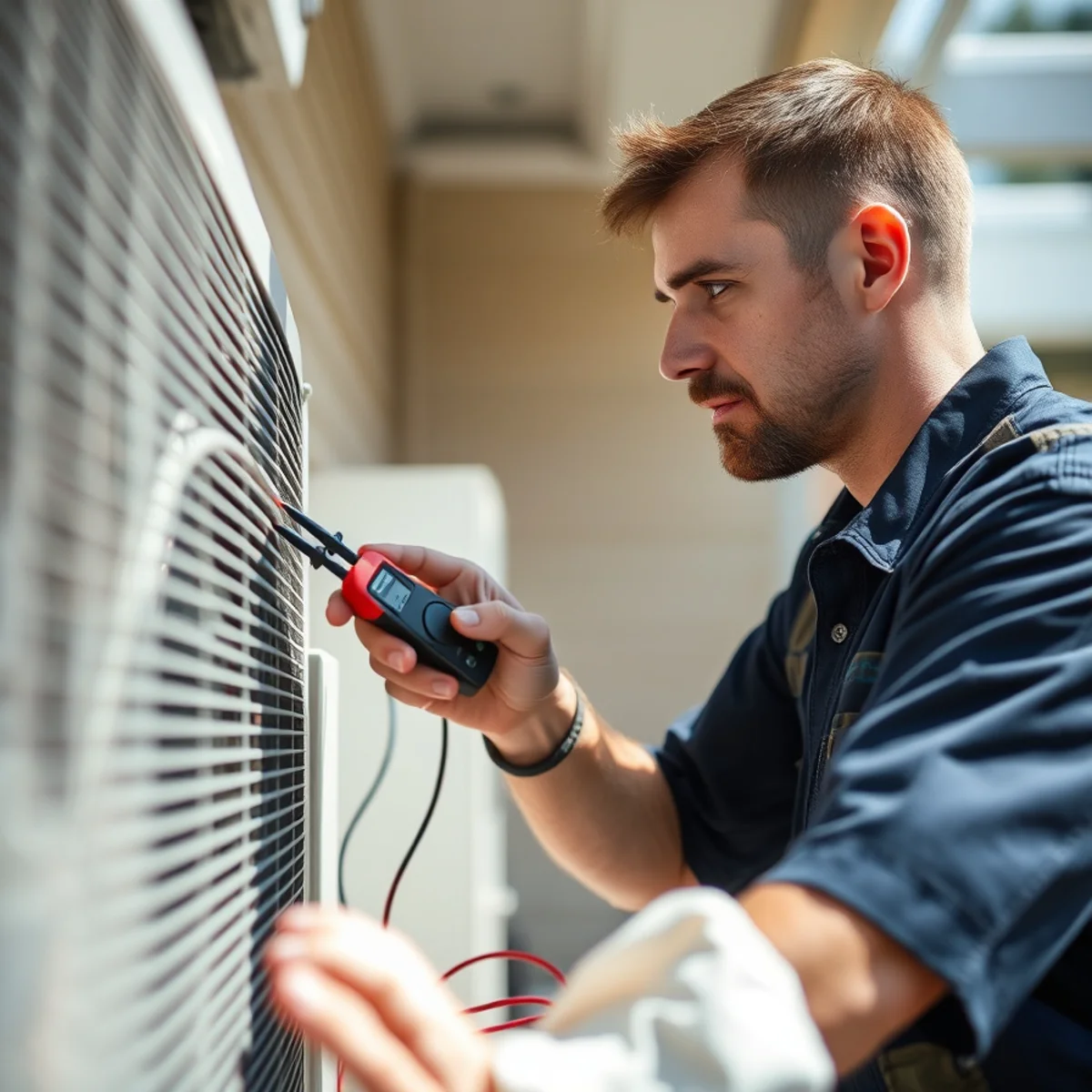
An air conditioner is a heavy electrical load, and our summer thunderstorms in the Chattahoochee Valley trip breakers all the time. If the thermostat looks fine, power is the next place to look.
Head to your electrical panel and find the breakers labeled for the air handler and the condenser. A tripped breaker does not always look obviously off. Sometimes it sits in a middle, mushy position. To reset it, push it firmly all the way to OFF first, then back to ON. One reset is worth trying.
There is also a small switch near your indoor furnace or air handler that looks like a regular light switch. Someone doing attic or closet work can flip it by accident and leave it off. Make sure it is on. Outside, next to the condenser, there is a pull-out disconnect box on the wall. Confirm it is seated and pushed in fully. One firm warning: if a breaker trips again right after you reset it, stop. That repeated trip is the system protecting you from a real electrical fault, and forcing it can damage equipment or start a fire. Do not keep flipping it. Call us at +1 (327) 210-5999 and let a tech find the cause safely.
Look at the Condensate Drain and the Float Switch
This is the check that catches people off guard, and it is especially common around here. The Phenix City humidity factor is real. Our Chattahoochee River microclimate pulls enormous moisture into the air, and your AC pulls that moisture back out as condensation. All of it drains away through a small PVC line.
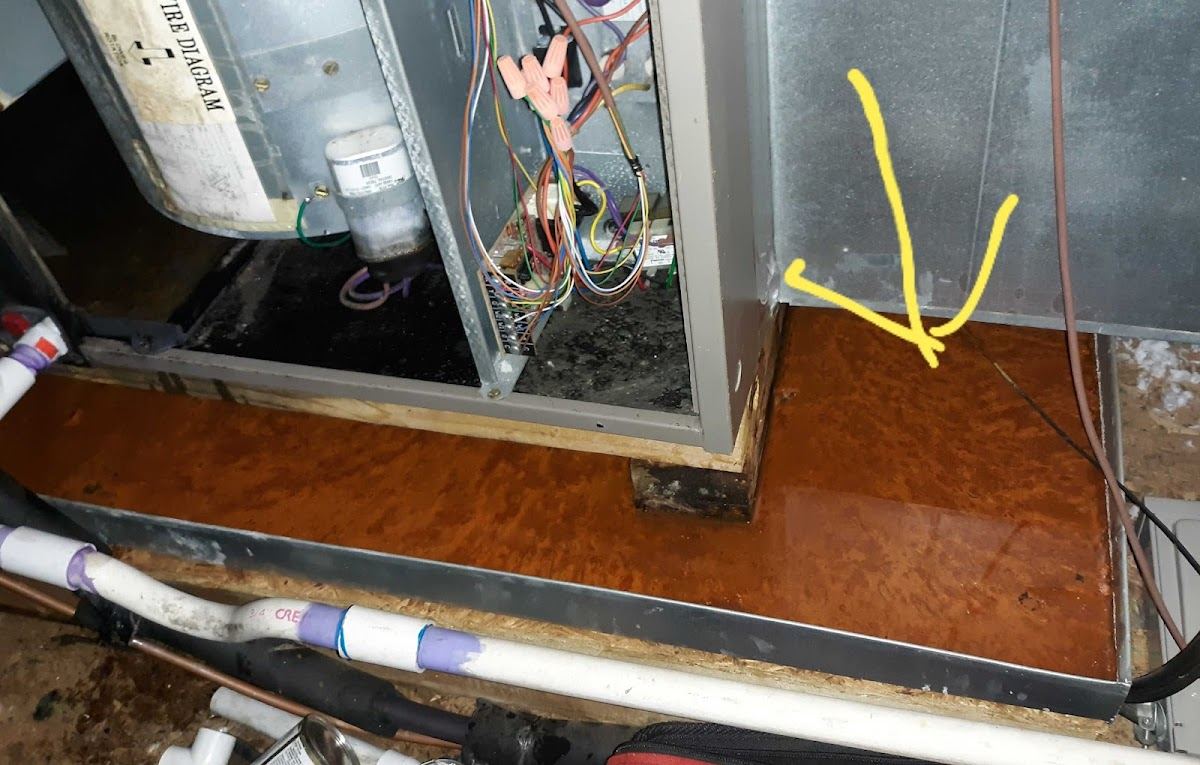
When that line clogs with algae and slime, the water has nowhere to go. Most modern systems have a safety float switch in the drain pan that shuts the whole unit down before water overflows and ruins your ceiling or floor. So a clogged drain can look exactly like a dead air conditioner, when really it is the system protecting your home.
If you can safely reach the drain pan near your indoor unit and you see standing water, that is your answer. Some homeowners are comfortable carefully vacuuming the drain line with a wet/dry vac at the outdoor end. If that is beyond what you want to tackle, it is a fast, affordable fix for us, and clearing these algae clogs is routine summer work in neighborhoods like Ladonia, Riverchase, and Idle Hour.
Reset the System and Give It a Few Minutes
Air conditioners do not always restart the instant you ask them to. Many have a built-in delay that protects the compressor from short-cycling, which can be three to five minutes long. If you just changed a setting or reset a breaker, wait a full five minutes before deciding nothing is happening.
You can also try a full system reset. Turn the thermostat to OFF, then shut off power at the breaker for about a minute, restore power, and set the thermostat back to COOL. This clears minor electronic glitches the same way restarting a phone does. It will not fix a real mechanical problem, but it costs nothing to try.
While you wait, listen and look. Does the outdoor fan spin? Do you hear a hum or a click from the condenser? Is anything cold at the vents at all? Those clues tell a tech a great deal before they even arrive.
When You Should Stop and Call a Pro
Some symptoms are not DIY territory. They point to electrical, refrigerant, or compressor issues that require licensed, trained hands and proper tools. Trying to push past them risks your safety and usually makes the repair bigger. Call us if you notice any of the symptoms below.
If your unit hums but will not start, or simply runs without cooling, our ac not cooling diagnostics get to the bottom of it fast. And when a no-start turns out to be something deeper, our ac repair in Phenix City, AL covers all major brands. No brand lock-in, an honest look at repair versus replace with real numbers, and owner Scott Copeland standing behind the work.
- A burning, hot-electronics, or melting-plastic smell coming from any part of the system.
- A breaker that trips again immediately after you reset it.
- A loud buzzing or humming at the outdoor unit while the fan refuses to turn.
- Ice or frost built up on the refrigerant lines or the indoor coil.
- The unit runs but never cools, which often signals a refrigerant leak. We handle that as EPA-compliant leak detection and repair, never a quick top-off that just leaks out again.
- No power anywhere in the system after you have checked every breaker, switch, and the disconnect.
A Quick Word on Prevention
Most July breakdowns are not bad luck. They are small problems that quietly built up since last summer. A clogged drain, a weak capacitor, a dirty coil, or low refrigerant rarely fail at a convenient time. They wait for the hottest, most humid afternoon, because that is when your system is working hardest.
A spring tune-up clears the condensate line, checks electrical components before they quit, and catches the corrosion our river-valley humidity loves to cause. It is the cheapest way to avoid a no-start emergency when you need cool air the most.
If you have worked through these checks and your AC still will not turn on, do not sweat it out. Call My Affordable Air at +1 (327) 210-5999 or schedule service online. We have kept Phenix City families breathing better since 1997, we offer same-day service when available, and we will give you a fair, upfront price before any work begins.
Frequently Asked Questions
A lit thermostat only means the thermostat has power, not the whole system. Check that it is set to COOL and at least five degrees below room temperature, then look at the breakers for both the indoor and outdoor units, the switch by your air handler, and the outdoor disconnect. A tripped float switch from a clogged condensate drain is another common cause around here, since it shuts the system down to prevent water damage.
Need a hand from a local technician?
My Affordable Air has helped Phenix City families breathe better since 1997. Call for honest, licensed HVAC help.